
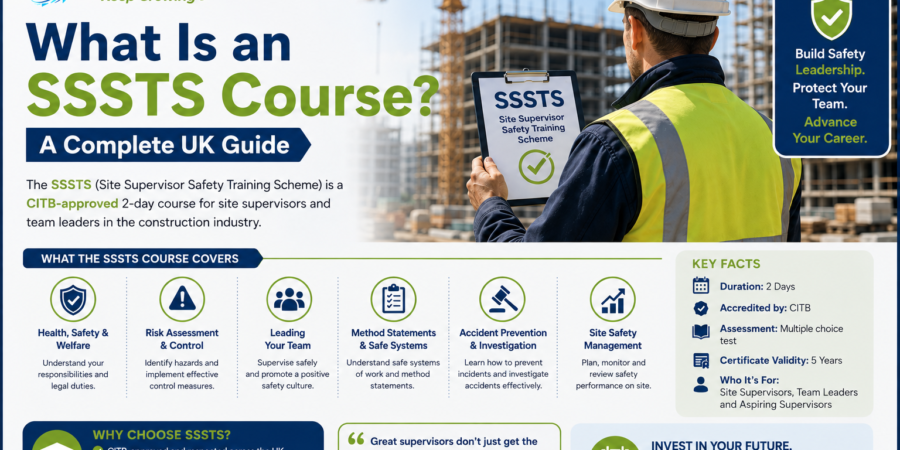
What Is an SSSTS Course?
If you are working in construction and have responsibility for supervising workers, you may have heard about an SSSTS Course.
SSSTS stands for Site Supervisors’ Safety Training Scheme. It is a construction safety course designed for people who have, or are preparing to take on, supervisory responsibilities on a construction site.
Unlike general site safety training, an SSSTS Course focuses on the responsibilities of supervisors. A supervisor needs to do more than understand personal safety. They may also need to monitor workers, identify hazards, communicate safe working procedures, and make sure site activities are carried out safely.
This makes SSSTS training particularly relevant to construction professionals moving from skilled work into supervision.
In this guide, we explain what an SSSTS Course is, who should take it, what you learn, how long it takes, how the assessment works, and how it can support your career in the UK construction industry. SSSTS is part of a wider range of construction training options. You can explore the available CITB Courses from S9 Training Solutions to find training that suits your career goals.
What Does SSSTS Stand For?
SSSTS stands for Site Supervisors’ Safety Training Scheme.
The course is associated with CITB and is aimed at people who have supervisory responsibilities within construction.
A supervisor can play an important role between site management and workers.
They may be expected to:
- Monitor working practices.
- Communicate instructions.
- Identify hazards.
- Help control workplace risks.
- Monitor health and safety procedures.
- Supervise subcontractors and workers.
- Encourage safe working practices.
- Report problems to site management.
An SSSTS Course helps learners understand these responsibilities and develop the knowledge needed to supervise construction activities safely. SSSTS is associated with CITB and provides training relevant to construction supervisors. You can learn more about CITB training and construction industry requirements on the official CITB website.
Who Should Take an SSSTS Course?
An SSSTS Course is mainly intended for construction workers who have supervisory responsibilities or are moving into a supervisory position.
This can include:
- Construction supervisors.
- Site supervisors.
- Team leaders.
- Chargehands.
- Experienced tradespeople moving into supervision.
- Workers responsible for overseeing other employees.
- Construction professionals preparing for supervisory roles.
You do not necessarily need to be called a “supervisor” to benefit from the course.
If your job involves directing other workers or monitoring their activities, your employer may consider supervisory safety training appropriate.
Why Is SSSTS Training Important?
Construction sites can change quickly.
Workers may be operating machinery, handling materials, working at height, moving around vehicles, or carrying out activities where several different hazards are present at the same time.
Supervisors are often close to these activities and may be responsible for making sure workers understand and follow safe working procedures.
An SSSTS Course helps supervisors understand how to approach these responsibilities.
The training can help you develop knowledge around:
- Hazard identification.
- Risk control.
- Health and safety responsibilities.
- Communication.
- Site supervision.
- Legal requirements.
- Safe working practices.
- Environmental considerations.
Good supervision can contribute to a safer and better-organised construction site.
What Does an SSSTS Course Cover?
One of the most important things to understand about an SSSTS Course is what you will actually learn.
The training covers subjects relevant to the day-to-day responsibilities of construction supervisors.
Health and Safety Responsibilities
Supervisors need to understand their responsibilities and know when issues need to be escalated to site management. The course introduces learners to the role supervisors can play in maintaining safe working conditions.
Supervisors should also understand their responsibilities under UK health and safety legislation. The Health and Safety Executive (HSE) provides official construction health and safety guidance.
Risk Assessment
Risk assessment is an important part of construction safety.
Supervisors need to understand how hazards can affect workers and what controls should be considered.
The objective is to make safety practical rather than treating risk assessments as paperwork that is simply completed and forgotten.
Method Statements
Construction activities can require specific procedures for completing work safely.
Supervisors may need to understand method statements and make sure workers follow the agreed safe system of work.
Hazard Awareness
Supervisors should be able to recognise common construction hazards.
These can include:
- Working at height.
- Construction traffic.
- Plant and machinery.
- Excavation.
- Electricity.
- Manual handling.
- Hazardous substances.
- Poor housekeeping.
- Unsafe access and egress.
Recognising a hazard early can allow appropriate action to be taken before an incident occurs.
Communication
A supervisor needs to communicate clearly with workers and other people on site.
This can involve:
- Giving instructions.
- Explaining safety procedures.
- Raising concerns.
- Reporting incidents.
- Communicating changes.
- Discussing risks with workers.
Poor communication can increase the likelihood of mistakes, particularly when site conditions change.
Environmental Awareness
Construction supervisors may also have responsibilities relating to environmental issues.
The training can help learners understand the importance of managing areas such as waste, pollution, noise, and environmental risks.
How Long Is an SSSTS Course?
An SSSTS Course is generally delivered over two days.
The two-day format allows learners to cover the key subjects associated with construction supervision.
Training can include tutor-led sessions, discussions, activities, examples, and assessment preparation.
The exact course structure can vary depending on the provider and current CITB requirements, so check the details before booking.
Can You Take an SSSTS Course Online?
Online SSSTS training can be a convenient option for construction professionals who cannot easily attend a classroom course.
A live virtual course can allow learners to participate remotely while completing scheduled training sessions.
This can be useful for supervisors who are working full-time and want to avoid travelling to a training centre.
Before choosing an online SSSTS Course, check:
- Course dates.
- Training times.
- Delivery format.
- Technology requirements.
- Assessment arrangements.
- Attendance requirements.
You should also make sure you can participate fully throughout the training rather than treating online learning as something you can complete whenever convenient.
What Happens During SSSTS Training?
The course normally involves structured learning over the required training period.
You can expect a combination of:
- Tutor-led discussions.
- Presentations.
- Construction examples.
- Group activities.
- Questions and answers.
- Safety scenarios.
- Assessment preparation.
The purpose is not simply to give learners information.
A good SSSTS Course should help you understand how safety principles apply to situations you may encounter while supervising construction work.
Is There an Assessment?
Yes. Learners should expect an assessment as part of the SSSTS training process.
The assessment checks whether you have understood the key subjects covered during the course.
This is why active participation is important.
Rather than waiting until the final session to start revising, pay attention throughout the course and ask the trainer about anything you do not understand.
How Can You Prepare for the Assessment?
You can improve your preparation by:
- Attending all required sessions.
- Taking useful notes.
- Listening carefully to the trainer.
- Asking questions.
- Reviewing difficult topics.
- Understanding practical safety situations.
- Using appropriate preparation materials.
Understanding the principles is more useful than trying to memorise information without context.
SSSTS vs SMSTS: What Is the Difference?
SSSTS and SMSTS are both associated with construction safety, but they are designed for different levels of responsibility.
SSSTS is primarily aimed at supervisors.
SMSTS is aimed at people with significant management responsibilities.
For example, an experienced construction worker who has recently become a supervisor may need SSSTS. A site manager responsible for planning, managing workers, coordinating contractors, and overseeing health and safety may require SMSTS.
Your current responsibilities should therefore be considered when choosing between the two. If you are already working at management level, you may want to explore SMSTS training instead, as it is designed for professionals with significant site management responsibilities.
Can SSSTS Help With Career Progression?
An SSSTS Course can be useful for construction professionals who want to move into supervisory positions.
A common career pathway might look like:
Trainee → Skilled Worker → Supervisor → Site Manager → Construction Manager
Of course, construction careers do not always follow the same route.
Your progression may depend on your trade, experience, qualifications, employer, and career objectives.
However, developing supervisory skills can be an important step for workers who want to take on greater responsibility.
SSSTS can complement practical construction experience by helping you understand the safety responsibilities associated with supervising others.
What Are the Benefits of an SSSTS Course?
Better Understanding of Site Safety
The training can improve your understanding of common construction hazards and safe working practices.
Stronger Supervisory Skills
You can develop knowledge relevant to supervising workers and communicating safety requirements.
Improved Risk Awareness
Understanding how to identify and control hazards can help supervisors make better decisions.
Professional Development
Completing relevant training can support your development when moving into a supervisory role.
Greater Responsibility
An SSSTS Course can help you understand what is expected from people who supervise construction activities.
Career Opportunities
Employers may look for relevant training when recruiting or promoting workers into supervisory positions.
However, training should always be considered alongside practical experience and other qualifications required for the specific role.
How to Choose the Right SSSTS Training Provider
Once you decide that an SSSTS Course is suitable, the next step is finding an appropriate training provider.
Before booking, consider:
Course Dates
Choose dates when you can attend all required sessions.
Delivery Format
Decide whether online or classroom training suits your circumstances.
Course Information
Check what is included in the training and what you need to prepare before starting.
Learner Support
Look for clear communication and support throughout the training process.
Construction Training Experience
Consider whether the provider has experience delivering relevant construction courses.
S9 Training Solutions provides construction training options for professionals at different stages of their careers. You can explore the available courses and find training that matches your role and development goals.
Who May Not Need SSSTS?
Not everyone working on a construction site needs an SSSTS Course.
A worker who has no supervisory responsibilities may need a different type of training.
Similarly, someone who already has significant management responsibilities may need management-level training such as SMSTS instead.
The right course depends on:
- Your current job role.
- Your responsibilities.
- Your experience.
- Your career plans.
- Your employer’s requirements.
If you are unsure, discuss your training needs with your employer or a suitable training provider before booking.
What Should You Do Before Booking an SSSTS Course?
Before booking, ask yourself a few simple questions.
Do I supervise workers?
If you regularly direct or oversee other workers, supervisory training may be relevant.
Am I moving into a supervisory position?
If you have been offered a supervisory role, check what training your employer expects.
Do I need a two-day course?
Make sure you can attend all required training sessions.
Would online training suit me?
Consider your internet connection, equipment, working environment, and ability to participate in live sessions.
Does the course match my career goals?
Think about whether supervision is the next step you want to take in your construction career.
Frequently Asked Questions About SSSTS Courses
What is an SSSTS Course?
An SSSTS Course is the Site Supervisors’ Safety Training Scheme. It is designed for construction professionals who have supervisory responsibilities or are preparing to move into a supervisory role.
How long does an SSSTS Course take?
SSSTS training is generally delivered over two days. The exact timetable depends on the training provider and current course arrangements.
Who needs an SSSTS Course?
It is mainly aimed at construction supervisors, team leaders, chargehands, and experienced workers who supervise other people or are moving into supervisory positions.
Is SSSTS the same as SMSTS?
No. SSSTS is designed primarily for supervisors, while SMSTS is intended for people with significant construction management responsibilities.
Can I take SSSTS training online?
Online SSSTS training may be available through suitable training providers. Check the course format, dates, attendance requirements, and assessment arrangements before booking.
Is there an assessment on an SSSTS Course?
Yes. An assessment forms part of the course. Learners should participate actively throughout the training and prepare for the assessment using the appropriate course material.
Can SSSTS help me become a site manager?
SSSTS can be a useful part of a career progression pathway towards site management. However, site managers normally need relevant experience, qualifications, and additional training depending on the role.
Does SSSTS expire?
SSSTS certification has a validity period, and learners should check the current requirements for refresher training before their certificate expires.
Is SSSTS suitable for a labourer?
If a labourer has no supervisory responsibilities, SSSTS may not be the most appropriate starting point. The correct training depends on the person’s role, responsibilities, and career goals.
Should I take SSSTS or SMSTS?
If you are primarily supervising workers, SSSTS may be more appropriate. If you have significant responsibility for managing construction activities and site safety, SMSTS may be more suitable.
Final Thoughts
An SSSTS Course is designed to help construction supervisors understand the health and safety responsibilities that come with supervising workers and construction activities.
The training is generally completed over two days and covers important areas such as risk assessment, hazard awareness, method statements, communication, legal responsibilities, and environmental considerations.
For an experienced construction worker preparing to become a supervisor, SSSTS can provide useful knowledge for taking on greater responsibility.
However, choosing the right course is important. If your responsibilities are at management level, an SMSTS Course may be more appropriate. If you do not supervise others, you may need a different type of construction training.
Before booking an SSSTS Course, consider your current role, responsibilities, experience, employer requirements, and long-term career plans.
The right training can help you build your knowledge, strengthen your confidence, and prepare for greater responsibility within the UK construction industry.
:::
