
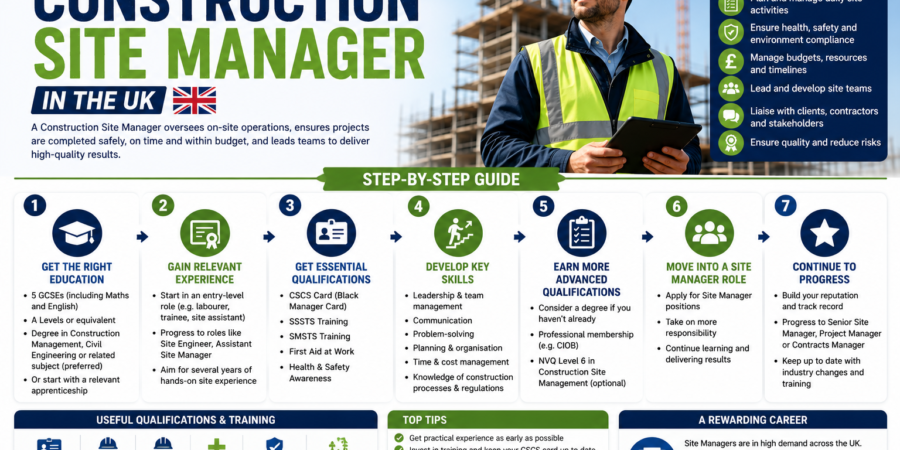
What Is a Construction Site Manager?
A Construction Site Manager is responsible for planning, organizing, supervising, and managing construction projects from start to finish. They ensure that work is completed safely, on schedule, within budget, and in accordance with UK building regulations and health and safety legislation. Every successful construction project depends on an experienced Construction Site Manager who can coordinate workers, communicate with clients, solve problems, and maintain high standards throughout the project.
The construction industry is one of the UK’s largest employment sectors, creating thousands of new opportunities each year. As more residential, commercial, and infrastructure developments begin across the country, employers continue to seek qualified professionals who can confidently manage construction sites. Becoming a Construction Site Manager is an excellent career choice for individuals who enjoy leadership, problem-solving, organization, and working in a fast-paced environment.
Unlike many entry-level construction roles, a Construction Site Manager must possess a combination of practical experience, recognized qualifications, leadership abilities, and extensive knowledge of construction regulations. Employers expect managers to understand health and safety legislation, project planning, risk management, budgeting, workforce supervision, and quality assurance.
A Construction Site Manager acts as the central point of communication between clients, architects, engineers, suppliers, subcontractors, and construction workers. They ensure every stage of the project progresses according to schedule while maintaining compliance with legal requirements and industry standards.
Many professionals begin their careers as laborers, apprentices, or skilled tradespeople before progressing into supervisory and management roles. Over time, they complete qualifications such as the NVQ Level 6 Diploma in Construction Site Management and the Site Management Safety Training Scheme (SMSTS) and obtain the Black CSCS Manager Card to demonstrate their competence.
Choosing a career as a Construction Site Manager provides long-term stability, opportunities for professional development, and the chance to work on exciting projects that shape communities throughout the UK. Whether you are interested in residential housing, commercial developments, schools, hospitals, or large infrastructure projects, site management offers rewarding career opportunities with excellent progression prospects.
In this guide, you will learn everything you need to know about becoming a Construction Site Manager, including qualifications, responsibilities, essential skills, training requirements, career pathways, and the certifications employers look for when recruiting construction managers.
Why Become a Construction Site Manager?
Working as a Construction Site Manager offers far more than simply supervising building projects. It is a career that combines technical knowledge, leadership, communication, planning, and decision-making while providing opportunities to influence the successful completion of important construction projects.
There are many reasons why construction professionals choose to become a Construction Site Manager.
Some of the biggest benefits include:
- Excellent long-term career opportunities.
- Strong demand throughout the UK construction industry.
- Opportunities to manage exciting construction projects.
- Professional recognition within the industry.
- Greater responsibility and leadership.
- Opportunities for career progression.
- Improved earning potential.
- Development of valuable management skills.
- Ability to lead large construction teams.
- Increased job stability.
The UK construction industry continues to experience growth across both public and private sectors. Housing developments, transport infrastructure, schools, hospitals, commercial offices, and renewable energy projects all require experienced site managers to oversee construction work safely and efficiently.
Another major advantage is career progression. After gaining experience as a Construction Site Manager, many professionals move into senior roles such as:
- Senior Site Manager
- Project Manager
- Contracts Manager
- Construction Manager
- Operations Manager
- Contracts Director
- Construction Director
Each promotion brings greater responsibility and opportunities to manage increasingly complex projects.
Employers also appreciate managers who demonstrate a commitment to continuous professional development. Completing recognized qualifications and updating health and safety knowledge helps Construction Site Managers remain competitive within the industry.
What Does a Construction Site Manager Do?
A Construction Site Manager is responsible for coordinating every aspect of a construction project from the initial planning stage through to final completion. Their role requires strong leadership, organization, technical knowledge, and excellent communication skills.
Daily responsibilities often include:
- Planning daily site activities.
- Supervising construction workers.
- Coordinating subcontractors.
- Conducting site inspections.
- Managing project schedules.
- Monitoring budgets.
- Ordering construction materials.
- Ensuring quality standards are maintained.
- Carrying out risk assessments.
- Enforcing health and safety procedures.
- Liaising with architects and engineers.
- Preparing project reports.
One of the most important responsibilities of a Construction Site Manager is ensuring every worker follows health and safety legislation. They regularly inspect the site, identify hazards, investigate incidents, and implement corrective actions where necessary.
Site managers also monitor project progress against agreed deadlines. If unexpected issues arise, such as poor weather, supply delays, or design changes, they must quickly develop practical solutions that minimize disruption.
Communication is another vital part of the role. Throughout the day, a Construction Site Manager speaks with clients, consultants, suppliers, local authorities, inspectors, and construction workers to ensure everyone understands project objectives and responsibilities.
Strong leadership helps create productive teams and encourages workers to maintain high standards of workmanship throughout every stage of construction.
Construction Site Manager Responsibilities
Construction projects involve hundreds of individual tasks that must be carefully coordinated. A Construction Site Manager oversees these activities while ensuring projects remain compliant, efficient, and profitable.
Typical responsibilities include:
- Managing construction programmes.
- Allocating work to contractors.
- Supervising site operations.
- Monitoring project budgets.
- Preparing construction schedules.
- Conducting toolbox talks.
- Managing health and safety.
- Performing quality inspections.
- Maintaining project documentation.
- Coordinating equipment deliveries.
- Resolving workplace issues.
- Ensuring compliance with UK legislation.
A Construction Site Manager also works closely with clients throughout the project, providing progress updates and ensuring expectations are met.
Another important responsibility involves environmental management. Site managers ensure waste is handled responsibly, pollution is minimized, and construction activities comply with environmental regulations.
The ability to balance productivity, quality, cost control, and safety is what separates successful managers from average supervisors.
Qualifications Needed
Employers expect a Construction Site Manager to hold recognized qualifications that demonstrate both technical competence and management capability.
Common qualifications include:
- NVQ Level 6 Diploma in Construction Site Management.
- Site Management Safety Training Scheme (SMSTS).
- Black CSCS Manager Card.
- CITB Managers and Professionals Health, Safety, and Environment Test.
- First Aid at Work certificate.
- Construction management apprenticeship.
- HNC or HND in Construction.
- Degree in Construction Management (optional).
These qualifications help managers understand:
- Construction legislation.
- Project management.
- Health and safety.
- Leadership.
- Risk management.
- Environmental responsibilities.
- Communication.
- Quality assurance.
Combining recognized qualifications with workplace experience significantly improves employability.
Do You Need an NVQ Level 6?
The NVQ Level 6 Diploma in Construction Site Management is widely recognized as one of the most valuable qualifications for anyone aiming to become a Construction Site Manager.
Unlike traditional academic courses, the NVQ is assessed in the workplace. Candidates demonstrate their competence through practical evidence collected during their everyday management activities.
The qualification covers topics such as:
- Construction planning.
- Project control.
- Health and safety management.
- Resource allocation.
- Quality management.
- Risk assessments.
- Contract administration.
- Leadership.
- Workforce supervision.
- Client communication.
Benefits of completing NVQ Level 6 include:
- Eligibility for the Black CSCS Manager Card.
- Industry-recognized qualification.
- Improved management knowledge.
- Better promotion opportunities.
- Enhanced professional credibility.
- Increased confidence when managing projects.
For many employers, holding an NVQ Level 6 demonstrates that a Construction Site Manager possesses the knowledge, experience, and leadership skills required to manage complex construction projects safely and efficiently.
Whether you are progressing from a supervisory role or looking to formalize years of construction experience, completing the NVQ Level 6 is one of the most effective steps towards building a successful career as a Construction Site Manager.
Why the SMSTS Course Matters
If you want to become a successful Construction Site Manager, completing the Site Management Safety Training Scheme (SMSTS) course is one of the most valuable steps you can take. The SMSTS course is widely recognized throughout the UK construction industry and demonstrates that you understand your legal responsibilities for managing health and safety on construction sites.
Many principal contractors and employers expect site managers to hold a valid SMSTS certificate before taking responsibility for construction projects. Although it is not a legal requirement for every role, it is often listed as a preferred or mandatory qualification when applying for management positions.
The course covers a wide range of important topics, including:
- Health and Safety at Work legislation
- Construction Design and Management (CDM) Regulations
- Risk assessments and method statements
- Fire prevention and emergency procedures
- Working at height
- Excavation safety
- Occupational health
- Environmental management
- Accident prevention
- Site inspections
- Leadership responsibilities
Completing the SMSTS course helps a Construction Site Manager develop confidence in making decisions that protect workers, contractors, and members of the public. It also improves understanding of current UK legislation and best practices, reducing the risk of accidents and legal issues.
The benefits of holding an SMSTS certificate include:
- Improved health and safety knowledge
- Better career opportunities
- Greater confidence when managing projects
- Industry-recognised certification
- Compliance with employer requirements
- Stronger leadership skills
Because health and safety are some of the most important responsibilities of a Construction Site Manager, employers highly value candidates who have completed recognized SMSTS training.
Do You Need a Black CSCS Card?
A black CSCS Manager Card is one of the highest-level cards available through the Construction Skills Certification Scheme. It is intended for experienced construction managers and demonstrates professional competence within the industry.
Many employers expect a Construction Site Manager to hold a valid Black CSCS Card before managing large construction projects. Although possession of the card is not required by law, it is widely recognized across the UK and provides reassurance that the cardholder has achieved the necessary qualifications and experience.
To obtain a Black CSCS Card, applicants generally need the following:
- An approved Level 6 or Level 7 management qualification
- A valid Managers and Professionals CITB Health, Safety and Environment Test
- Supporting qualification evidence
- A completed CSCS application
Benefits of holding the Black CSCS Card include the following:
- Recognition as a qualified construction manager
- Improved employability
- Greater opportunities for senior positions
- Increased confidence from employers and clients
- Access to major construction projects
A Construction Site Manager with a black CSCS card is often viewed as someone who has demonstrated commitment to professional development and industry standards.
Essential Skills Every Construction Site Manager Needs
Qualifications are essential, but they are only one part of becoming a successful construction site manager. Employers also look for professionals with strong practical and interpersonal skills.
Some of the most important skills include:
Leadership
Construction projects rely on effective leadership. A construction site manager must motivate teams, delegate responsibilities, resolve conflicts, and maintain productivity throughout the project.
Communication
Daily communication takes place with clients, architects, engineers, subcontractors, suppliers, inspectors, and construction workers. Clear communication reduces misunderstandings and keeps projects running smoothly.
Organisation
Construction projects involve hundreds of individual tasks. Good organizational skills help manage schedules, documentation, deliveries, inspections, and workforce planning.
Problem Solving
Unexpected situations such as weather delays, material shortages, or design changes require fast and practical decision-making.
Time Management
Meeting deadlines is critical. A construction site manager must carefully organize work programs and monitor progress to ensure projects remain on schedule.
Health and Safety Awareness
Understanding workplace hazards and implementing safe systems of work protects both employees and employers while ensuring compliance with UK legislation.
Financial Management
Many Construction Site Managers assist with monitoring budgets, controlling costs, and ensuring efficient use of resources. Developing these skills alongside recognized qualifications creates a strong foundation for long-term career success.
Step-by-Step Career Path
There are several routes to becoming a Construction Site Manager. Most professionals begin with practical construction experience before progressing into supervisory and management roles.
A typical career pathway includes the following:
- Construction Labourer
- Skilled Tradesperson
- Team Leader
- Site Supervisor
- Assistant Site Manager
- Construction Site Manager
- Senior Site Manager
- Project Manager
- Contracts Manager
- Construction Director
Every stage provides valuable experience and helps develop leadership, technical knowledge, and project management skills. Many professionals complete qualifications while working, allowing them to gain practical experience and recognized certification simultaneously. Professional development should continue throughout your career by completing refresher training, learning new regulations, and improving management skills.
Construction Site Manager Salary
One of the reasons many professionals choose this career is the opportunity for long-term financial progression. Salaries vary depending on experience, qualifications, location, employer, and the size of the projects being managed.
Factors affecting salary include:
- Years of construction experience
- Management qualifications
- SMSTS certification
- Black CSCS Card
- Project size
- Employer
- Geographic location
- Specialist construction sector
As managers gain experience, they often progress into higher-paying senior management positions. Completing recognized qualifications and continually developing professional skills can significantly improve long-term earning potential.
Construction Site Managers who successfully deliver projects while maintaining excellent health and safety standards are often considered for promotion into project management and director-level roles. Whether working in residential construction, commercial developments, civil engineering, or infrastructure projects, experienced managers remain in high demand across the UK construction industry.
Industries That Employ Construction Site Managers
A qualified Construction Site Manager can work across a wide range of sectors within the UK construction industry. As investment continues in housing, infrastructure, commercial developments, and renewable energy, the demand for experienced managers remains strong.
Industries that regularly recruit Construction Site Managers include:
- Residential house building
- Commercial construction
- Civil engineering
- Highway and road construction
- Rail infrastructure
- Healthcare projects
- Education facilities
- Industrial developments
- Retail construction
- Renewable energy projects
- Public sector developments
- Property refurbishment and renovation
Each sector presents different challenges, but the core responsibilities remain the same. A Construction Site Manager must ensure projects are delivered safely, efficiently, and in compliance with UK regulations.
Career Progression Opportunities
One of the biggest advantages of becoming a Construction Site Manager is the opportunity for continuous career growth. As you gain experience and complete additional qualifications, you can progress into more senior leadership positions.
Common career progression routes include:
- Senior Site Manager
- Project Manager
- Contracts Manager
- Construction Manager
- Operations Manager
- Commercial Manager
- Contracts Director
- Construction Director
Each promotion brings greater responsibility, leadership opportunities, and the chance to manage larger and more complex projects. Continuing professional development, industry training, and recognized qualifications will support long-term career success.
Common Mistakes to Avoid
Many aspiring Construction Site Managers delay their career progression by making avoidable mistakes. Understanding these common issues can help you prepare more effectively.
Avoid the following:
- Delaying professional qualifications
- Choosing the wrong training provider
- Ignoring health and safety legislation
- Allowing certificates to expire
- Applying for the wrong CSCS card
- Poor preparation for the CITB test
- Weak communication with project teams
- Failing to maintain accurate site records
- Not developing leadership skills
- Neglecting continuous professional development
By avoiding these mistakes, you can improve your professional reputation and become a more effective Construction Site Manager.
Why Choose S9 Training Solutions?
Choosing the right training provider plays an important role in building a successful career. S9 Training Solutions offers industry-recognised construction training designed to help learners achieve their career goals.
Benefits of training with S9 Training Solutions include:
- Experienced industry trainers
- Flexible learning options
- Recognised construction qualifications
- Practical guidance throughout your training
- Support with career progression
- High-quality customer service
- Courses aligned with current industry standards
Whether you are beginning your construction career or progressing into management, S9 Training Solutions provides the knowledge and support needed to become a successful Construction Site Manager.
Start your training journey: https://s9trainingsolutions.com/
Browse available courses: https://s9trainingsolutions.com/shop/
Speak with the team: https://s9trainingsolutions.com/contact/
For official industry guidance, visit:
CITB: https://www.citb.co.uk/
CSCS: https://www.cscs.uk.com/
Health and Safety Executive: https://www.hse.gov.uk/construction/
Frequently Asked Questions
1. What qualifications do I need to become a Construction Site Manager?
Most employers look for an NVQ Level 6 Diploma in Construction Site Management, a valid SMSTS certificate, the appropriate CITB Health, Safety, and Environment Test, and a Black CSCS Manager Card. Practical experience and leadership skills are also highly valued.
2. Do I need a university degree to become a Construction Site Manager?
No. Many Construction Site Managers build successful careers without a degree. They progress through apprenticeships, skilled trades, workplace experience, and recognized vocational qualifications such as the NVQ Level 6 Diploma.
3. Is the SMSTS course compulsory?
The SMSTS course is not a legal requirement for every role, but many employers expect Construction Site Managers to hold a valid certificate because it demonstrates knowledge of health and safety legislation and management responsibilities.
4. What does a Construction Site Manager do every day?
A Construction Site Manager plans construction activities, supervises workers, monitors budgets, manages health and safety, coordinates subcontractors, communicates with clients, and ensures projects are completed on time and to the required quality standards.
5. What is the Black CSCS Manager Card?
The Black CSCS Manager Card is issued to qualified construction managers who have achieved the appropriate management qualification and passed the required CITB Health, Safety and Environment Test. It demonstrates professional competence within the construction industry.
6. How long does it take to become a Construction Site Manager?
The timeline depends on your experience and qualifications. Many professionals first gain practical construction experience before completing management qualifications and progressing into site management roles.
7. What skills make a successful Construction Site Manager?
Successful Construction Site Managers demonstrate leadership, communication, organisation, time management, problem-solving, budgeting, and strong health and safety knowledge while effectively managing people and construction projects.
8. Can experienced workers become Construction Site Managers?
Yes. Experienced supervisors and skilled tradespeople often progress into site management by completing recognised qualifications, gaining management experience, and demonstrating leadership within construction projects.
9. Is there strong demand for Construction Site Managers?
Yes. The UK construction industry continues to require qualified Construction Site Managers across residential, commercial, infrastructure, industrial, and public sector projects, creating excellent long-term career opportunities.
10. Why should I choose S9 Training Solutions?
S9 Training Solutions offers recognised construction training, experienced tutors, flexible learning options, and professional support to help learners achieve the qualifications needed for successful careers in construction management.
Conclusion
Becoming a Construction Site Manager is an excellent career choice for individuals who want to combine practical construction knowledge with leadership and project management skills. From supervising construction teams to ensuring health and safety compliance, site managers play a vital role in delivering successful building projects across the UK.
Achieving recognized qualifications such as the NVQ Level 6 Diploma, SMSTS certification, and the Black CSCS Manager Card demonstrates your competence and commitment to professional standards. Combined with practical experience and continuous learning, these qualifications provide a strong foundation for long-term career progression.
Whether you are starting your construction career or looking to move into management, investing in professional training will improve your knowledge, increase your employment opportunities, and help you become a confident Construction Site Manager capable of managing projects safely and successfully.
Take the next step by exploring the training opportunities available through S9 Training Solutions and begin building a rewarding future in construction management.
